
Community


Published: 07-05-2025
10 min read
#React
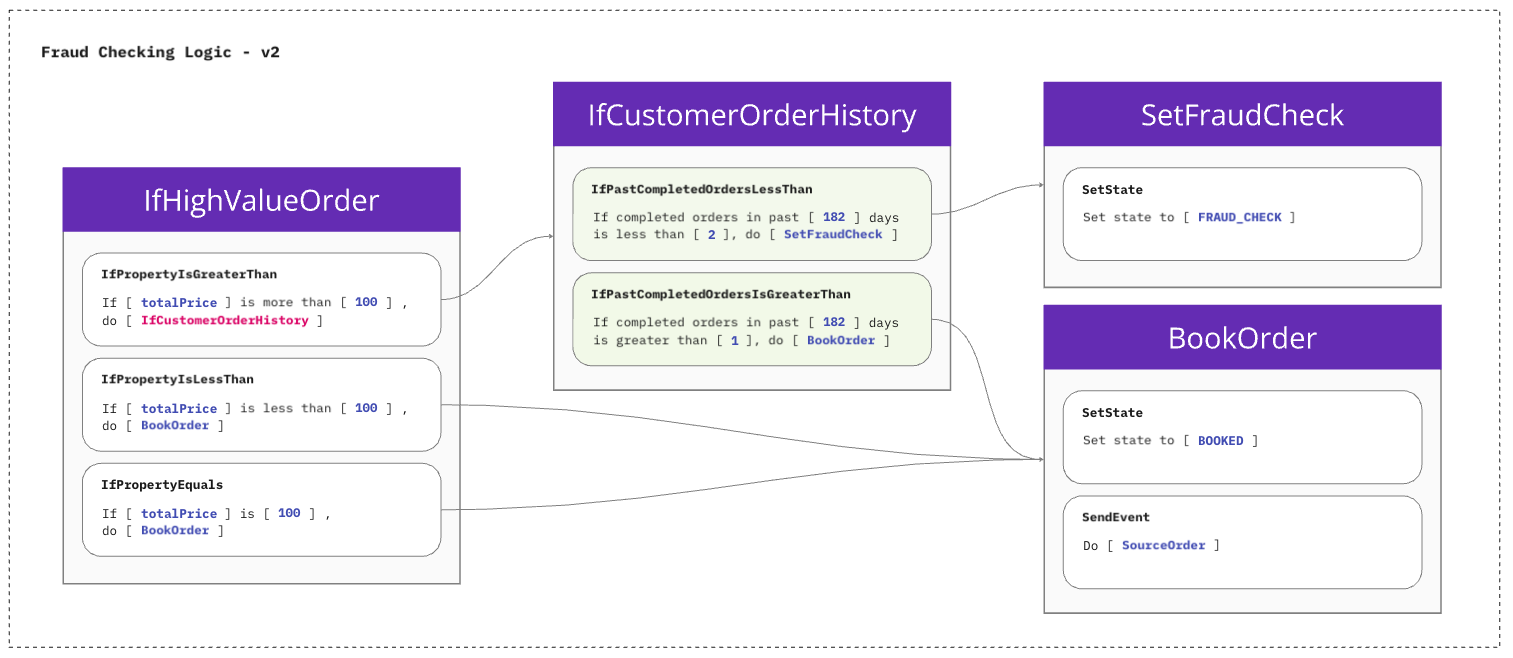
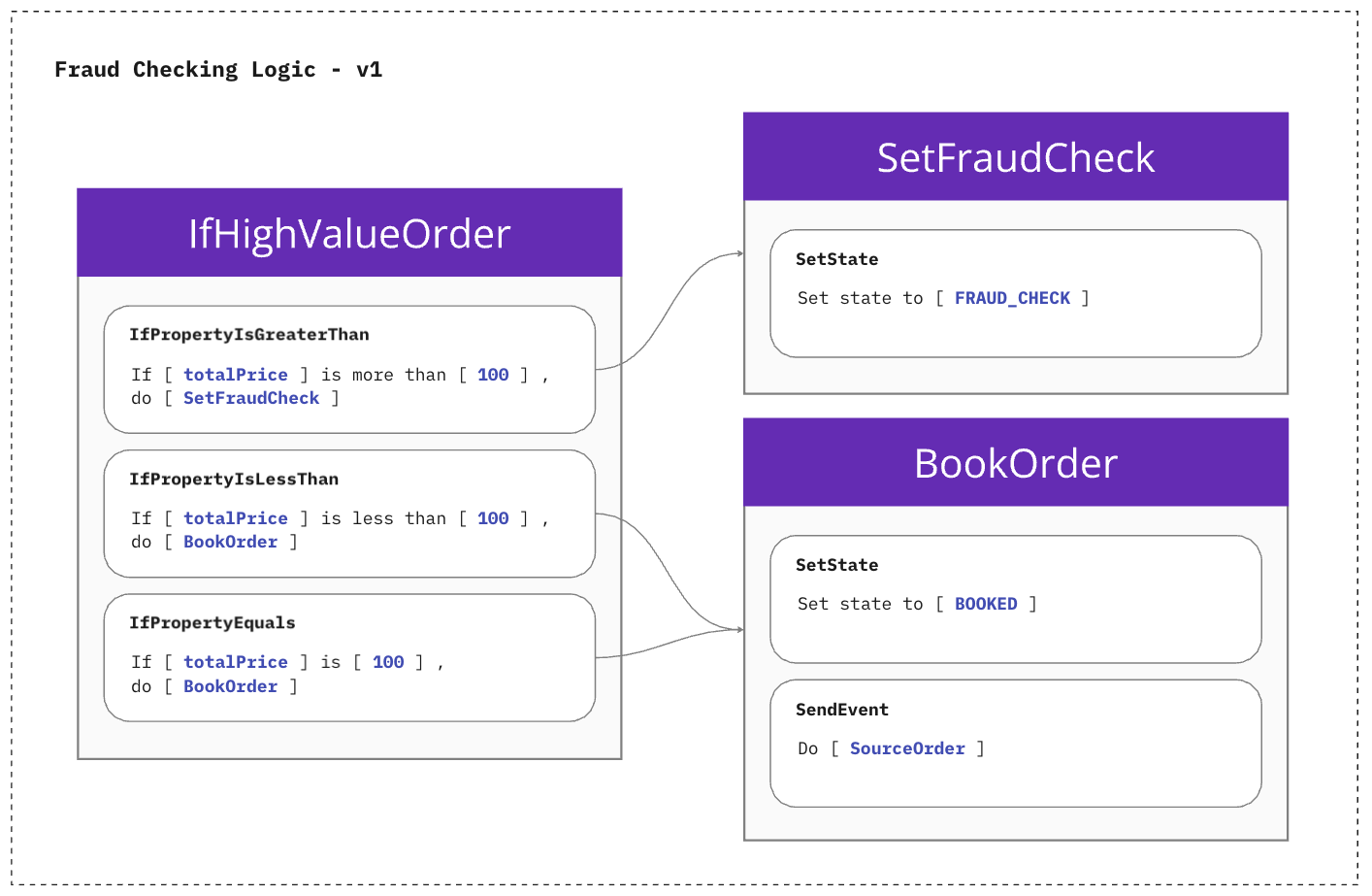 A Fraud Check configured by composition of Core Reference Module RulesLater, based on analysis of their data, they realize most Orders over $100 are okay from existing customers, so they ask for a change to the fraud checking logic. They ask that only Orders over $100 for customers with less than 2 successfully completed Orders in the past 6 months get flagged for a fraud check.To implement this logic, a new Rule would be required to query Orders for the current Customer reference where the Order status is COMPLETE.There is no need to change the existing Core Rules code. Rather one or more new Rules could be written and configured within the workflow like so:
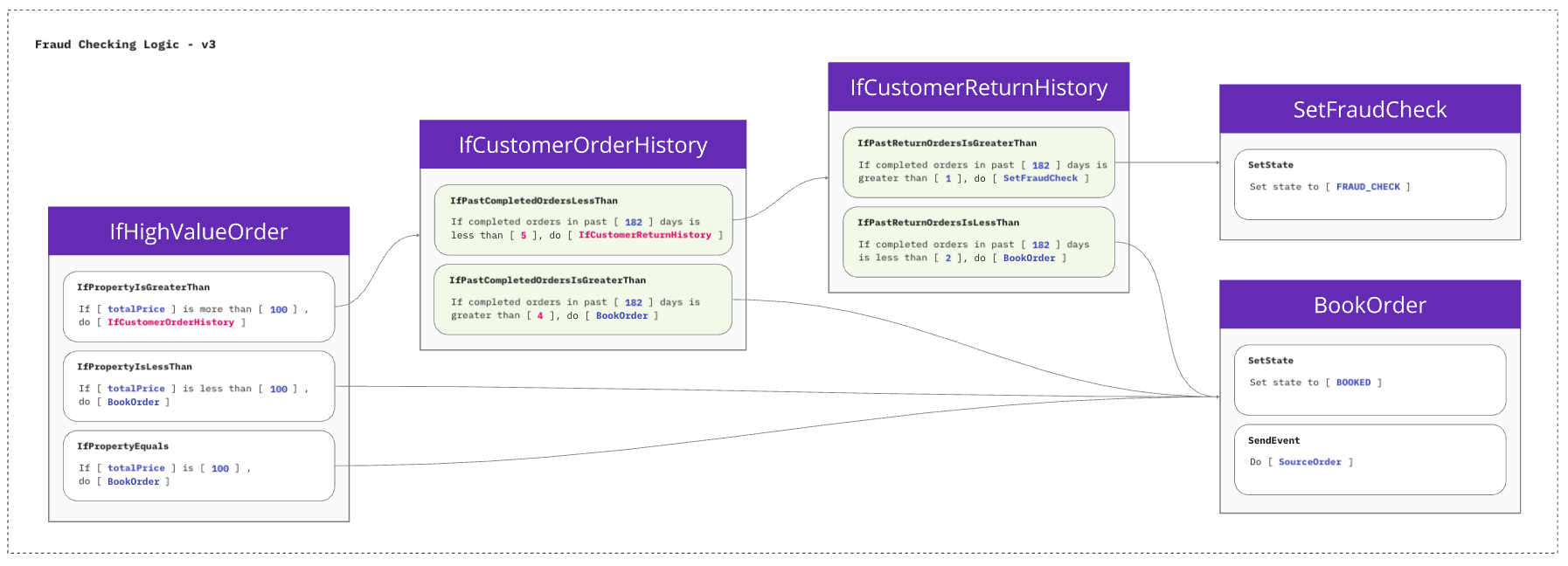
 Fraud Check Logic composed of Core Rules and New RulesPerhaps later, the client realizes that while the customer may have more than 2 completed orders, they also return a lot. In this case, they would like to add another condition to the fraud check. This time, they ask that any Orders over $100, where the customer has more than 1 return and less than 5 completed orders gets flagged for fraud check. Again, only the new Rules are written and then configured into the workflow:
 Fraud Check Logic composed of Core Rules and New RulesSmaller composable rules mean more unique solutions are possible with the same set of building blocks.Large monolithic rules are much more difficult to adapt and change, meaning they are more costly.Fluent Commerce customers need the ability to adapt to their market continuously. The Fluent Platform is designed to empower customers to do this without significant development costs each time they want to change or extend their business logic.
Lesley Dean
Copyright © 2026 Fluent Commerce